مملكة القوط الغربيين
مملكة القوط الغربيين Visigothic Kingdom Regnum Visigothorum Gutthiuda Thiudinassus | |||||||||||||||
|---|---|---|---|---|---|---|---|---|---|---|---|---|---|---|---|
| 418–721 | |||||||||||||||
 أقصى اتساع لمملكة القوط الغربيين في تولوز، ح. 500 (تظهر بالبرتقالي), تظهر أراضي فـُقِدت بعد ڤويه (تظهر بالبرتقالي الفاتح). | |||||||||||||||
| العاصمة | تولوز (حتى 500s) طليطلة | ||||||||||||||
| اللغات الشائعة | اللاتينية, القوطية (يتكلمها النخبة) | ||||||||||||||
| الدين | أريانية، المسيحية النيقية, الكاثوليكية الرومانية, واليهودية. | ||||||||||||||
| الحكومة | ملكية | ||||||||||||||
| ملك | |||||||||||||||
• 418-419 | واليا | ||||||||||||||
• 714-721 | أردو | ||||||||||||||
| التاريخ | |||||||||||||||
• القوط الغربيون مُنِحوا أراض في گاليا أكيتانيا | 418 | ||||||||||||||
• الهزيمة على يد الأمويين | 721 | ||||||||||||||
| |||||||||||||||


مملكة القوط الغربيين Visigothic Kingdom حكام غالة استردوا أسبانيا من الوندال في عام 420، وعادوا بعدئذ إلى روما، ولكن روما كانت عاجزة عن حماية أسبانيا، ولهذا فإن السويفي Suevi خرجوا من معاقلهم في التلال الواقعة في الجنوب الغربي من شبه الجزيرة واجتاحوها كلها، فانقض عليها القوط الغربيون مرة أخرى بقيادة ثيودريك الثاني (456) وأوريك (466) بعد أن عبروا جبال البرانس، وفتحوا معظم أسبانيا واحتفظوا بالبلاد في هذه المرة وضموها إلى أملاكهم، وحكمت أسبانيا من ذلك الوقت أسرة من القوط الغربيين وظلت على عرشها حتى جاءها المسلمون.
التاريخ
المملكة الفدرالية


مملكة تولوز

وأنشأت الملكية الجديدة، في بلدة طليطلة عاصمة فخمة، وجمعت فيها حاشية موفورة الثراء. وكان أثاناجلد Athanagild (563-567) وليوفيجلد Leovigild (568-586) ملكين قويين، هزما الغزاة الفرنجة في الشمال وجيوش بيزنطية في الجنوب؛ وكانت ثروة أثاناجلد هي التي أكسبت ابنتيه ميزة فذة هي انهم قتلتا وهما ملكتان لملكين من الفرنجة. وحدث في عام 589 أن غير ريكارد Recared مذهبه ومذهب الكثرة الغالبة من القوط الغربيين في أسبانيا من الأريوسية إلى المسيحية الأصلية. ولعل سبب هذا التغير أنه قرأ من قبل تاريخ ألريك الثاني. ومن ذلك أصبح الأساقفة أكبر المؤيدين للملكية وأقوى سلطة في الدولة؛ فقد سيطروا بفضل تفوقهم في العلم ودقة النظام على الأشراف الذين كانوا يجتمعون معهم في مجالس الحكم في طليطلة؛ ومع أن سلطة الملك كانت سلطة مطلقة من الوجهة النظرية، ومع أنه كان هو الذي يختار الأساقفة، فإن هذه المجالس كانت هي التي تختاره، وتأخذ عليه قبل أن يباشر الحكم المواثيق بشأن السياسة التي تريد منه أن يتبعها، ووضعت بإرشاد رجال الدين طائفة من القوانين (634)، كانت أوفى جميع شرائع البرابرة وأقلها تسامحاً. وقد أصلحت من شأن الإجراءات القضائية بأن عمدت إلى تقدير شهادة الشهود في تقدير أخلاق المتهمين بدل شهادات الأصدقاء، وطبقت قوانين واحدة على الرومان والقوط الغربيين، فوضعت بذلك مبدأ المساواة أمام القانون(60). ولكنها لم تأخذ بمبدأ حرية العبادة، وحتمت على جميع السكان أن يعتنقوا المسيحية الصحيحة، وأقرت اضطهاد يهود أسبانيا الذي دام طويلاً، وارتكبت فيه أشد ضروب القسوة.
مملكة هسپانيا الأريانية

ونسي القوط الغربيون قبل أن ينقضي على فتحهم أسبانيا لغتهم الألمانية بتأثير نفوذ الكنيسة التي ظلت تستخدم اللغة اللاتينية في مواعظها وطقوسها الدينية، وأفسدوا اللاتينية المستعملة في شبه الجزيرة بأن أدخلوا عليها قوة الرجولة والجمال النسوي اللذين تمتاز بهما اللغة الأسبانية الحاضرة، وكانت المدارس الملحقة بالأديرة والأسقفيات هي التي تقوم بالتعليم، وكان معظمه تعليماً كنسياً، ولكنه كان يشمل شيئاً من دراسة الكتب القديمة، وأنشئت مجامع علمية في بقلارا Vaclara وطليطلة، وسرقسطة، وأشبيلية، وكان الشعر يلقى تشجيعاً كبيراً، وأما التمثيل فكان يقاوم لما فيه من فحش وبذاء.

ولم يحفظ التاريخ من أسماء الأدباء في أسبانيا القوطية إلا اسم إيزيدور الإشبيلي Isidorc (حوالي 560-636). وتروي إحدى الأقاصيص الطريقة كيف هرب غلام أسباني من بيته غضباً من تأنيبه من أجل كسله، وأخذ يطوف بالبلاد حتى أنهكه التعب، فجلس إلى جانب بئر، فاستلفت نظره شق عميق في حجر مجاور لحافة البئر. ومرت به في ذلك الوقت فتاة فقالت له إن هذا الشق من أثر احتكاك الحبل الذي ينزل الدلو في البئر ويرفعها، فلما سمعها إيزيدور قال في نفسه: "إذ كان في استطاعة هذا الحبل اللين بدأ به على العمل في كل يوم أن يشق الحجر، فما من شك أن المثابرة يمكن أن تغلب على بلادة عقلي". ثم عاد من فوره إلى بيت أبيه وواصل الدرس حتى أصبح أسقف أشبيلية المتبحر في العلم(61). ولسنا نعلم إلا القليل عن حياته، وكل ما نستطيع أن نقوله إنه وجد بين مشاغله الدينية الكثيرة، التي كان يقوم بها بما يرضي ضميره، متسعاً من الوقت يكتب فيه ستة كتب. ولعله أراد أن يعين ذاكرته فجمع في خلال عدد كبير من السنين فقرات مختلفة في جميع الموضوعات نقلها من كتب المؤلفين الوثنيين والمسيحيين واستحثه صديقه بروليو Broulio أسقف سرقسطة على أن ينشر هذه المختارات، فأجابه إلى طلبه، وحورها حتى أصبحت من أقوى كتب العصور الوسطى أثراً وسماها "عشرون كتاباً في الاشتقاقات والأصول" وضمها الآن مجلد ضخم يحتوي على 900 صفحة من القطع الكبير. وهو موسوعة علمية ولكنها غير مرتبة على الحروف الهجائية؛ وتبحث على التوالي في المجموعة الثلاثية من العلوم القديمة وهي النحو، والبلاغة، والمنطق؛ ثم في الحساب، والهندسة، والموسيقى، والفلك وهي المجموعة الرباعية عند الأقدمين؛ ثم تبحث في الطب؛ والقانون؛ والتواريخ، والدين، والتشريح، ووظائف الأعضاء، وعلم الحيوان، وعلم الكون، والجغرافية الطبيعية، والهندسة المعمارية، والمساحة، والتعدين، والزراعة والحرب، والألعاب الرياضية، والسفن، والملابس، والأثاث، والأدوات المنزلية،...وكلما انتقل المؤلف إلى موضوع من هذه الموضوعات عرف مصطلحاته الأساسية، وبحث عن منشأها. مثال ذلك أنه يقول إن الإنسان يسمى باللاتينية (هومو Homo) لأن الله قد خلقه من التراب (هومس Humus)، والركبتان تسميان Genus، لأنهما يكونان مقابل الخدين Genae) في الجنين(62). وكان إزدور عالماً مجداً وإن لم يعن بالتفرقة بين موضوعات درسه؛ وكان واسع الإطلاع على اللغة اليونانية، يعرف الكثير من كتابات لكريتيوس Lukretius (وهو الذي لا يذكر في العصور الوسطى)، وقد حفظ لنا قطعاً مختارة من فقرات كثيرة من الآداب الوثنية لولاه لضاعت عن آخرها. وبحوثه خليط من الاشتقاق الغريب، والمعجزات التي لا يقبلها عقل، ومن تفسيرات مجازية خيالية للكتاب المقدس؛ ومن العلوم الطبيعية والتاريخ حورت لكي تثبت مبادئ أخلاقية، وأخطاء في الحقائق يكفي القليل من الملاحظة لتصحيحها. وكتابه هذا أثر خالد يدل على ما كان فاشياً في هذا العهد من جهالة.
ولا يكاد يبقى شيء من الفنون التي كانت في أسبانيا في عهد القوط الغربيين رياوح أن طليطلة، وإيطاليا وقرطبة، وغرناطة، ومديرا وغيرها من المدن كانت تحتوي على كنائس، وقصور، ومبان عامة جميلة المنظر، أقيمت على الطراز القديمة، ولكنها ميزت عنها بالرموز المسيحية، والنقوش البيزنطية(63). ويقول المؤرخون المسلمون إن العرب الفاتحين وجدوا في طليطلة وكنيستها الكبيرة خمسة وعشرين تاجاً من الذهب المرصع بالجواهر، وكتاباً مزخرفاً للتراتيل مكتوباً على ورقة من الذهب بمداد مصنوع من الياقوت المصهور، وأقمشة منسوجة بخيوط من الذهب والفضة، ودروعاً، وسيوفاً، وخناجر مرصعة من الجواهر، مزهريات مملوءة بها، ومنضدة من الزمرد مطعمة بالفضة والذهب- وكانت هذه المنضدة إحدى الهدايا الكثيرة الغالية التي أهداها أغنياء الغربيين إلى كنيستهم التي تحميهم وترد الأذى عنهم.
وظل استغلال الأقوياء والمهرة البائسين والسذج يجري مجراه في عهد القوط الغربيين كما كان يجري في عهد سائر الحكومات القديمة. فكان الأمراء والأحبار يجتمعون في حفلات دينية أو دنيوية فخمة، ويضعون قواعد للتحليل والتحريم، ويدبرون وسائل للإرهاب والرعب ليتغلبوا بذلك كله على مشاعر الجماهير ويهدئوا أفكارهم. وتركزت الثروة في أيدي عدد قليل من الأفراد، وكانت الثغرة الواسعة التي تفصل الأغنياء عن الفقراء، والمسيحيين عن اليهود تقسم الأمة ثلاث دول مختلفة؛ فلما أن جاء العرب لم يبال الفقراء واليهود بسقوط دولة ملكية وكنيسة لم تظهر شيئاً من الاهتمام بفقرهم وسامتهم كثيراً من أنواع الاضطهاد الديني.
مملكة طليطلة الكاثوليكية


ولما مات وتيزا Witiza ملك أسبانيا الضعيف في عام 708 لم يقبل الأشراف أن يخلفه على العرش أحد من أبنائه، بل أجلسوا عليه ردريك (لزريق) Roderick، ففر أبناء وتيزا إلى أفريقية، واستغاثوا بزعماء المسلمين. وقام المسلمون ببضع غارات تمهيدية على السواحل الأسبانية، عرفوا بها أن أسبانيا منقسمة على نفسها، وأنها تكاد تكون مجردة من وسائل الدفاع، فجاءوا إليها في عام 711 بقوة أكبر من قوتهم السابقة. والتقت جيوش طارق ولزريق في معركة وادي لكة على ضفاف بحيرة لا خندا Janda في مقاطعة قادس. انضمت فيها قوة من القوط إلى العرب؛ واختفى لزريق من المعركة. وتقدم المسلمون المنتصرون إلى أشبيلية، وقرطبة، وطليطلة؛ وفتحت كثير من المدائن الأسبانية أبوابها للغزاة. وأقام قائد العرب موسى بن نصير في العاصمة الأسبانية (713)، وأعلن أن أسبانيا أصبحت من ذلك الوقت ملكاً للمسلمين وللخليفة الأموي في دمشق.
المستوطنات
Visigothic settlements were concentrated along the Garonne River between Bordeaux and Toulouse in Aquitaine during the 5th century, according to contemporary sources under the terms of the late Roman Empire as foederatii, or allies, and assigned billeting obligations to provide lodging for Roman soldiers, more or less as the imperial military had done in other provinces.
Later in the century, following annexations made by King Euric in Gaul and Hispania once the Roman Empire of the West had collapsed, specially after the Battle of Vouille, many Goths and their federated peoples, such as the Vandals, Ostrogoths and Sarmatians, moved to settle more freely under their kindred clans' rulers, the reiks, who received dukedom territories or comital offices as counts over smaller territories or key urban locations within the provinces of Hispania and in southwestern Gaul and its Mediterranean coast. Their settlements were made around the Roman cities of Emerita Augusta (Mérida), Barcino (Barcelona), Hispalis (Seville), Toletum (Toledo) and Septimanian Narbonne, which would be the main bases of Gothic power politically as well as militarily during the rest of the kingdom's history, as well as other settlements that were dispersed in rural farming areas between the upper reaches of the Douro, Ebro and Tagus rivers, in an area between Tierra de Campos, also known as Campi Gothorum, around Central Castile and León and Rioja, and Toledo to the east and south. After the fall of the Galician Kingdom of the Suebi, some further settlements were made along the Tagus river north of Lisbon, by Porto and Astorga former strongholds of the Suebi. Little Visigothic settlement occurred elsewhere in the kingdom.[1]
تأسيس المدن
The Visigoths founded the only new cities in Western Europe between the fifth and eighth centuries. It is certain (through contemporary Spanish accounts) that they founded four, and a possible fifth city is ascribed to them by a later Arabic source. All of these cities were founded for military purposes and three of them in celebration of victory.

The first, Reccopolis, was founded by Liuvigild in 578 after his victory over the Franks, near what is today the tiny village of Zorita de los Canes. He named it after his son Reccared and built it with Byzantine imitations, containing a palace complex and mint, but it lay in ruins by the 9th century (after the Arab conquest).
At a slightly later date, Liuvigild founded a city he named Victoriacum after his victory over the Basques.[2] Though it is often supposed to survive as the city of Vitoria, contemporary 12th-century sources refer to the latter city's foundation by Sancho VI of Navarre.
Liuvigild's son and namesake of the first Visigothic city founded his own sometime around 600. It is referred to by Isidore of Seville as Lugo id est Luceo in the Asturias, built after a victory over the Asturians or Cantabri.[2]
The fourth and possibly final city of the Goths was Ologicus (perhaps Ologitis), founded using Basque labour in 621 by Swinthila as a fortification against the recently subjected Basques. It is to be identified with modern Olite.[2]
The possible fifth Visigothic foundation is Baiyara (perhaps modern Montoro), mentioned as founded by Reccared in the Geography of Kitab al-Rawd al-Mitar.[3]
الثقافة والتراث الكلاسيكي
The Visigothic rule has often been misattributed to be a part of the so-called Dark Ages, a time of supposedly cultural and scientific decay. Through the course of their existence the Visigoths supposedly remained "men of the woods never strayed too far from there," as Thomas F. Glick puts it.[4]
However, in fact, the Visigoths were preservers of the classical culture.[5] The bathing culture of Andalusia, for example, often said to be a Muslim invention, is a direct continuation of Romano-Visigothic traditions. Visigothic Mérida housed baths supplied with water by aqueducts, and such aqueducts are also attested in Córdoba, Cádiz and Recopolis. Excavations confirm that Recopolis and Toledo, the Visigothic capital, were heavily influenced by the contemporary Byzantine architecture.[6] When the Muslims looted Spain during their conquest they were amazed by the fine and innumerable Visigothic treasures.[7] A few of these treasures were preserved as they were buried during the Muslim invasions – e.g., the votive crowns from the treasure of Guarrazar.[8]
Only the senior monks were allowed to read books of non-Christian or heretic authors.[9] This did not stop the rise of intellectuals such as Isidore of Seville, one of the most quoted scholars of the Middle Ages. He was known for the breadth of his literary output, highlighted by his Etymologies, an encyclopedia of the knowledge of the epoch that was known and translated throughout medieval Europe. Eugenius I of Toledo was both theologian and poet, expert in mathematics and astronomy; Theodulf of Orléans, theologian and poet, after he had fled to the Frankish kingdom, participated in the Carolingian Renaissance.[10] A Muslim source referred to Visigothic Seville as the "abode of the sciences".[11] The Institutionum disciplinae from the mid seventh/early eight century confirms that Visigothic nobles were not only taught in reading and writing but also in science, medicine, law and philosophy.[12] An example of a highly educated nobleman was king Sisebut, who was a patron of learning and writer of poems, one of them about astronomy.[13]
قائمة الملوك
ملوك ترڤنگ
These kings and leaders – with the exception of Fritigern and possibly Alavivus – were pagans.
- Ariaric
- Aoric
- Athanaric (369–381)
- Rothesteus, sub-king
- Winguric, sub-king
- Alavivus (c. 376), rebel against Valens
- Fritigern (c. 376–c. 380), rebel against Athanaric and Valens
أسرة بالتي
These kings were Arians (followers of the theological teaching of Arius). They tended to succeed their fathers or close relatives on the throne and thus constitute a dynasty, the Balti.
- Alaric I (395–410)
- Athaulf (410–415)
- Sigeric (415)
- Wallia (415–418)
- Theodoric I (418–451)
- Thorismund (451–453)
- Theodoric II (453–466)
- Euric (466–484)
- Alaric II (484–507)
- Gesalec (507–511)
- Theodoric the Great (511–526), regent
- Amalaric (511–531)
ملوك ما بعد بالتي
The Visigothic monarchy took on a completely elective character with the fall of the Balti, but the monarchy remained Arian until Reccared I converted in 587 (Hermenegild had also converted earlier). Only a few sons succeeded their fathers to the throne in this period.
- Theudis (531–548)
- Theudigisel (548–549)
- Agila I (549–554)
- Athanagild (554–568)
- Liuva I (568–572), only ruled in Narbonensis from 569
- Liuvigild (569–586), ruled only south of the Pyrenees until 572
- Hermenegild (580–585), sub-king in Baetica
- Reccared I (580–601), son, sub-king in Narbonensis until 586, first Catholic king
- Liuva II (601–603), son
- Witteric (603–610)
- Gundemar (610–612)
- Sisebut (612–621)
- Reccared II (621), son
- Swinthila (621–631)
- Reccimer (626–631), son and associate
- Sisenand (631–636)
- Iudila (632–633), rebel
- Chintila (636–640)
- تولگا (640–641)
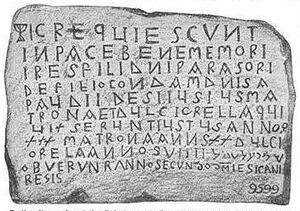 نصب جنائزي من نربون في القرن السابع لبداية عهد Egica. The text begins with the Latin phrase requiescunt in pace. In various sources it is described as a "Christian inscription",[14] an "inscription relating to the Jews of France",[15] or as a Jewish inscription dated with the local calendar—the regnal year of Egica—rather than the Hebrew calendar.[16]
 - Chindaswinth (641–653)
- Recceswinth (649–672), son, initially co-king
- فرويا (653), rebel
- وامبا (672–680)
- Erwig (680–687)
- Egica (687–702)
- Suniefred (693), rebel
- Wittiza (694–710), son, initially co-king or sub-king in Gallaecia
- Roderic (710–711), only in Lusitania and Carthaginiensis
- Agila II (711–714), only in Tarraconensis and Narbonensis
- Oppas (712), perhaps in opposition to Roderic and Agila II
- أردو (714–721), only in Narbonensis


.jpg)

شجرة العائلة
| Kings of the Visigoths family tree | |||||||||||||||||||||||||||||||||||||||||||||||||||||||||||||||||||||||||||||||||||||||||||||||||||||||||||||||||||||||||||||||||||||||||||||||||||||||||||||||||||||||||||||||||||||||||||||||||||||||||||||||||||||||||||||||||||||||||||||||||||||||||||||||||||||||||||||||||||||||||||||||||||||||||||||||||||||||||||||||||||||||||||||||||||||||||||||||||||||||||||||||||||||||||||||||||||||||||||||||||||||||||||||||||||||||||||||||||||||||||||||||||||||||||||||||||||||||||||||||||||||||||||||||||||||||||||||||||||||||||||||||||||||||||||||||||||||||||||||||||||||||||||||||||||||||||||||||||||||||||||||||||||||||||||||||||||||||||||||||||||||||||||||||||||||||||||||||||||||||||||||||||||||||||||||||||||||||||||||||||||||||||||||||||||||||||||||||||||||||||||||||||||||||||||||||||||||||||||||||||||||||||||||||||||||||||||||||||||||||||||||||||||||||||||||||||||||||||||||||||||||||||||||||||||||||||||||||||||||||||||||||||||||||||||||||||||||||||||||||||||||||||||||||||||||||||||||||||||||||
|---|---|---|---|---|---|---|---|---|---|---|---|---|---|---|---|---|---|---|---|---|---|---|---|---|---|---|---|---|---|---|---|---|---|---|---|---|---|---|---|---|---|---|---|---|---|---|---|---|---|---|---|---|---|---|---|---|---|---|---|---|---|---|---|---|---|---|---|---|---|---|---|---|---|---|---|---|---|---|---|---|---|---|---|---|---|---|---|---|---|---|---|---|---|---|---|---|---|---|---|---|---|---|---|---|---|---|---|---|---|---|---|---|---|---|---|---|---|---|---|---|---|---|---|---|---|---|---|---|---|---|---|---|---|---|---|---|---|---|---|---|---|---|---|---|---|---|---|---|---|---|---|---|---|---|---|---|---|---|---|---|---|---|---|---|---|---|---|---|---|---|---|---|---|---|---|---|---|---|---|---|---|---|---|---|---|---|---|---|---|---|---|---|---|---|---|---|---|---|---|---|---|---|---|---|---|---|---|---|---|---|---|---|---|---|---|---|---|---|---|---|---|---|---|---|---|---|---|---|---|---|---|---|---|---|---|---|---|---|---|---|---|---|---|---|---|---|---|---|---|---|---|---|---|---|---|---|---|---|---|---|---|---|---|---|---|---|---|---|---|---|---|---|---|---|---|---|---|---|---|---|---|---|---|---|---|---|---|---|---|---|---|---|---|---|---|---|---|---|---|---|---|---|---|---|---|---|---|---|---|---|---|---|---|---|---|---|---|---|---|---|---|---|---|---|---|---|---|---|---|---|---|---|---|---|---|---|---|---|---|---|---|---|---|---|---|---|---|---|---|---|---|---|---|---|---|---|---|---|---|---|---|---|---|---|---|---|---|---|---|---|---|---|---|---|---|---|---|---|---|---|---|---|---|---|---|---|---|---|---|---|---|---|---|---|---|---|---|---|---|---|---|---|---|---|---|---|---|---|---|---|---|---|---|---|---|---|---|---|---|---|---|---|---|---|---|---|---|---|---|---|---|---|---|---|---|---|---|---|---|---|---|---|---|---|---|---|---|---|---|---|---|---|---|---|---|---|---|---|---|---|---|---|---|---|---|---|---|---|---|---|---|---|---|---|---|---|---|---|---|---|---|---|---|---|---|---|---|---|---|---|---|---|---|---|---|---|---|---|---|---|---|---|---|---|---|---|---|---|---|---|---|---|---|---|---|---|---|---|---|---|---|---|---|---|---|---|---|---|---|---|---|---|---|---|---|---|---|---|---|---|---|---|---|---|---|---|---|---|---|---|---|---|---|---|---|---|---|---|---|---|---|---|---|---|---|---|---|---|---|---|---|---|---|---|---|---|---|---|---|---|---|---|---|---|---|---|---|---|---|---|---|---|---|---|---|---|---|---|---|---|---|---|---|---|---|---|---|---|---|---|---|---|---|---|---|---|---|---|---|---|---|---|---|---|---|---|---|---|---|---|---|---|---|---|---|---|---|---|---|---|---|---|---|---|---|---|---|---|---|---|---|---|---|---|---|---|---|---|---|---|---|---|---|---|---|---|---|---|---|---|---|---|---|---|---|---|---|---|---|---|---|---|---|---|---|---|---|---|---|---|---|---|---|---|---|---|---|---|---|---|---|---|---|---|---|---|---|---|---|---|---|---|---|---|---|---|---|---|---|---|---|---|---|---|---|---|---|---|---|---|---|---|---|---|---|---|---|---|---|---|---|---|---|---|---|---|---|---|---|---|---|---|---|---|---|---|---|---|---|---|---|---|---|---|---|---|---|---|---|---|---|---|---|---|---|---|---|---|---|---|---|---|---|---|---|---|---|---|---|---|---|---|---|---|---|---|---|---|---|---|---|---|---|---|---|---|---|---|---|---|---|---|---|---|---|---|---|---|---|---|---|---|---|---|---|---|---|---|---|---|---|---|---|---|---|---|---|---|---|---|---|---|---|---|---|---|---|---|---|---|---|---|---|---|---|---|---|---|---|---|---|---|---|---|---|---|---|---|---|---|---|---|---|---|---|---|---|---|---|---|---|---|---|---|---|---|---|---|---|---|---|---|---|---|---|---|---|---|---|---|---|---|---|---|---|---|---|---|---|---|---|---|---|---|---|---|---|---|---|---|---|---|---|---|---|---|---|---|---|---|---|---|---|---|---|---|---|---|---|---|---|---|---|---|---|---|---|---|---|---|---|---|---|---|---|---|---|---|---|---|---|---|---|---|---|---|---|---|---|---|---|---|---|---|---|---|---|---|---|---|---|---|---|---|---|---|---|---|---|---|---|---|---|---|---|---|---|---|---|
| |||||||||||||||||||||||||||||||||||||||||||||||||||||||||||||||||||||||||||||||||||||||||||||||||||||||||||||||||||||||||||||||||||||||||||||||||||||||||||||||||||||||||||||||||||||||||||||||||||||||||||||||||||||||||||||||||||||||||||||||||||||||||||||||||||||||||||||||||||||||||||||||||||||||||||||||||||||||||||||||||||||||||||||||||||||||||||||||||||||||||||||||||||||||||||||||||||||||||||||||||||||||||||||||||||||||||||||||||||||||||||||||||||||||||||||||||||||||||||||||||||||||||||||||||||||||||||||||||||||||||||||||||||||||||||||||||||||||||||||||||||||||||||||||||||||||||||||||||||||||||||||||||||||||||||||||||||||||||||||||||||||||||||||||||||||||||||||||||||||||||||||||||||||||||||||||||||||||||||||||||||||||||||||||||||||||||||||||||||||||||||||||||||||||||||||||||||||||||||||||||||||||||||||||||||||||||||||||||||||||||||||||||||||||||||||||||||||||||||||||||||||||||||||||||||||||||||||||||||||||||||||||||||||||||||||||||||||||||||||||||||||||||||||||||||||||||||||||||||||||
انظر أيضاً
- Spanish surnames of Goth origin
- Romano-Germanic culture
- For evidence of Visigothic taxation, see De fisco Barcinonensi
- Councils of Toledo
- الشعوب الجرمانية
- Barbarian Kingdoms
- Visigothic script
- الآريوسية
- Protofeudalism
- الأندلس
- خلافة قرطبة
- تاريخ اسبانيا
- تاريخ شعب الباسك
- ملوك القوط الغربيين
الهامش
- ^ World and Its Peoples: Europe. Marshall Cavendish. 2010. p. 60. ISBN 978-0-7614-7883-6.
- ^ أ ب ت Thompson, "The Barbarian Kingdoms in Gaul and Spain".
- ^ Lacarra, "Panorama de la historia urbana en la Península Ibérica desde el siglo V al X", La città nell'alto medioevo, 6 (1958:319–358), in Estudios de alta edad media española, p. 48.
- ^ Fernández-Morera 2016, pp. 57–59.
- ^ Fernández-Morera 2016, p. 238.
- ^ Fernández-Morera 2016, pp. 68–70.
- ^ Fernández-Morera 2016, pp. 60–64.
- ^ Fernández-Morera 2016, p. 41, note 94.
- ^ Kampers 2008, p. 321.
- ^ Fernández-Morera 2016, pp. 68–69.
- ^ Fernández-Morera 2016, p. 70.
- ^ Kampers 2008, p. 322.
- ^ Fear 1997, XXII-XXIII.
- ^ Clauss, Manfred; Slaby, Wolfgang A.; Kolb, Anne; Woitas, Barbara. "EDCS-28300234". Epigraphik-Datenbank Clauss/Slaby (in الألمانية). Catholic University of Eichstätt-Ingolstadt. OCLC 435767433. EDCS-28300234. Retrieved سبتمبر 26, 2020.
{{cite web}}: Check|author-link3=value (help); Check|author-link=value (help) (Click on search link and enter above EDCS-ID.) - ^ Broydé, Isaac Luria; et al. (1906). "France". In Funk, Isaac Kaufmann; Singer, Isidore; Vizetelly, Frank Horace (eds.). The Jewish Encyclopedia. Vol. V. New York and London: Funk and Wagnalls Company. p. 445. hdl:2027/mdp.39015064245445. OCLC 61956716.
- ^ Fellous, Sonia (مايو 3, 2018). "Les noms des juifs à Paris (XIIᵉ-XIVᵉ siècle)". In Nadiras, Sébastien (ed.). Noms de lieux, noms de personnes: la question des sources (in الفرنسية). doi:10.4000/books.pan.951. ISBN 9791036512308. OCLC 1193020908. Archived from the original on مايو 29, 2020. Retrieved سبتمبر 26, 2020.
Mais la date du décès est calculée en fonction du calendrier local, ici celui du règne du roi Egica, et non en fonction du calendrier juif comme au bas Moyen Âge.
{{cite book}}: Check|author-link1=value (help)
المصادر
- Bachrach, Bernard S. "A Reassessment of Visigothic Jewish Policy, 589-711." American Historical Review 78, no. 1 (1973): 11-34.
- Collins, Roger. The Arab Conquest of Spain, 710-797. Oxford: Blackwell Publishers, 1989. Reprinted 1998.
- Collins, Roger. Law, Culture, and Regionalism in Early Medieval Spain. Great Yarmouth: Variorum, 1992. ISBN 0 86078 308 1.
- Collins, Roger. Visigothic Spain, 409-711. Oxford: Blackwell Publishing, 2004. ISBN 0 631 18185 7.
- Heather, Peter. The Goths. Oxford: Blackwell Publishers, 1996.
- James, Edward, ed. Visigothic Spain: New Approaches. Oxford: Oxford University Press, 1980. ISBN 0 19 822543 1.
- Lacarra, José María. Estudios de alta edad media española. Valencia: 1975.
- Sivan, Hagith. "On Foederati, Hospitalitas, and the Settlement of the Goths in A.D. 418." American Journal of Philology 108, no. 4 (1987): 759-772.
- Thompson, E. A.. "The Barbarian Kingdoms in Gaul and Spain", Nottingham Mediaeval Studies, 7 (1963:4n11).
- Thompson, E. A.. The Goths in Spain. Oxford: Clarendon Press, 1969.
- Wallace-Hadrill, John Michael. The Barbarian West, 400-1000. 3rd ed. London: Hutchison, 1967.
- Wolfram, Herwig. History of the Goths. Thomas J. Dunlap, trans. Berkeley: University of California Press, 1988.
- CS1 الألمانية-language sources (de)
- CS1 الفرنسية-language sources (fr)
- Pages using infobox country with unknown parameters
- Articles with hatnote templates targeting a nonexistent page
- Articles containing لاتينية-language text
- انحلالات 721
- دول وأراضي تأسست في 418
- شعوب جرمانية قديمة
- قوط
- تاريخ الشعوب الجرمانية
- Medieval France
- Medieval Spain
- Medieval Portugal
- Late Antiquity
- بلدان سابقة في اوروبا
- Visigothic Hispania