قرلوغ
Qarlughid Dynasty | |||||||||||||
|---|---|---|---|---|---|---|---|---|---|---|---|---|---|
| 1238–1266 | |||||||||||||
The Qarlughids in South Asia, circa 1250 CE | |||||||||||||
| العاصمة | Ghazna, Bamiyan | ||||||||||||
| اللغات المشتركة | Persian (administrative), Turkic (dynasty). | ||||||||||||
| الدين | Islam | ||||||||||||
| الحكومة | Monarchy | ||||||||||||
| Malik, Khan | |||||||||||||
• 1238–1249 | Saif al-Din al-Hasan Qarlugh | ||||||||||||
• 1249–1266 | Nasir al-Din Muhammad Qarlugh | ||||||||||||
| التاريخ | |||||||||||||
• تأسست | 1238 | ||||||||||||
• انحلت | 1266 | ||||||||||||
| العملة | Jital | ||||||||||||
| |||||||||||||
| اليوم جزء من | Afghanistan Pakistan | ||||||||||||

.png&filetimestamp=20240612220622&)


The Qarlughids were a tribe of Turkic origin that controlled Ghazni, lands of the Bamyan, the Kurram Valley (Ghazna, Banban, and Kurraman), and established a short-lived Muslim principality and dynasty that lasted between 1236 and 1266. The Qarlughids (Karluk Turks) arrived from the north to settle in the regions of Hazarajat together with the armies of Muhammad II of Khwarezm, the Shah of Khwarezm.
History
Throughout most of its existence, the Qarlugh Kingdom functioned as a buffer state between its two powerful neighbors, the Delhi Sultanate to the east and south and the Mongol Empire to the north and west.[1] With the Malik on the throne, the Qarlugh would frequently switch allegiances between their two powerful neighbors and through balanced diplomacy managed to become an important trade intermediary between the Mongols of Central Asia and the lands of the subcontinent. One testament to Qarlughid prosperity is the significant coinage found from this dynasty.[2][مطلوب مصدر أفضل]
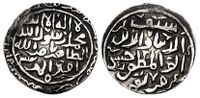
Silver Tanka of Saif al-Din al-Hasan (1239–1249), ruler of the Qarlughids. Sind mint. In the name of the Abbasid Caliph, al-Zahir. Struck in 1225-1226 CE.
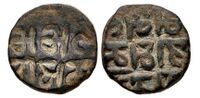
Copper Jital of Nasir al-Din Muhammad Qarlugh (1249–1259) in the Indian Sarada script: śri maha /mada ka/ raluka.

._Brockage_strike._Incuse_of_reverse_%C5%9Bri_maha_mada_ka_raluka_in_three_lines.jpg&filetimestamp=20251223213126&)


References
- ^ André Wink (1997). Al-Hind the Making of the Indo-Islamic World: The Slave Kings and the Islamic Conquest : 11Th-13th Centuries. BRILL. ISBN 978-90-04-10236-1.
- ^ Royal Asiatic Society of Great Britain and Ireland (1908). Journal of the Royal Asiatic Society of Great Britain and Ireland. Cambridge University Press for the Royal Asiatic Society. pp. 389–408. JSTOR 25210587. Retrieved 2016-06-13.
- ^ Marshall Cavendish Corporation (2006). Peoples of Western Asia. p. 364.
{{cite book}}: External link in|ref= - ^ Bosworth, Clifford Edmund (2007). Historic Cities of the Islamic World. p. 280.
{{cite book}}: External link in|ref= - ^ Borrero, Mauricio (2009). Russia: A Reference Guide from the Renaissance to the Present. p. 162.
{{cite book}}: External link in|ref=
External links
- http://collection.britishmuseum.org/id/thesauri/x116561[dead link]
- http://grifterrec.rasmir.com/islam/qarlughid.html


- Short description is different from Wikidata
- Former country articles categorised by government type
- كل المقالات بدون مراجع موثوقة
- كل المقالات بدون مراجع موثوقة from March 2023
- Portal-inline template with redlinked portals
- Pages with empty portal template
- Articles with dead external links from July 2025
- Turkic peoples of Asia
- Dynasties of Afghanistan
- History of Khyber Pakhtunkhwa
- Former monarchies of India
- History of Ghazni Province
- Muslim dynasties